From Data Lake to AI-Ready Data Platform: What Enterprises Need to Change in 2026
Most enterprises modernized their data lake within the last three years. Most of those same platforms would fail an internal AI-readiness audit today.
A Modern Data Lake and an AI-Ready Data Platform Are Not the Same Thing
A data lake was built to answer one question: can we store everything cheaply and make sense of it later? An AI-ready data platform has to answer a harder one: can a model or an agent trust this data enough to act on it without a human checking first?
That’s the actual dividing line. BI dashboards had a human in the loop — an analyst who’d flag the odd number before it reached a board deck. Agentic AI removes that checkpoint. The data either supports autonomous action or it doesn’t, and there’s no dashboard-viewer standing between a bad record and a bad decision anymore.
This is why the readiness numbers look the way they do. MIT’s widely cited research found that roughly 95% of generative AI pilots deliver no measurable profit-and-loss impact, and Gartner puts up to 40% of AI project cost into fixing data issues that surface only after deployment — after the platform, the model, and the use case are already committed. The lake was rarely the problem. What sat on top of it was assumed to be good enough, and for BI, it usually was.
Data Quality: Why AI Doesn't Tolerate What BI Dashboards Forgave
Bad data used to be survivable. A dashboard with a small error rate produced a slightly-off chart; someone caught it in review. An AI agent working from the same error rate makes a slightly-off decision, at machine speed, with no review step, potentially thousands of times before anyone notices.
Gartner projects that half of enterprises will adopt dedicated data observability tooling by 2026, up from under 20% in 2024 — a five-fold jump in two years, driven almost entirely by AI rather than BI. That shift tracks with what’s happening in production: ML models degrade without proper monitoring at a rate that makes quality assurance a continuous discipline rather than a pre-launch checklist item.
What changes in practice for enterprises moving toward an AI-ready data platform:
- Quality checks move upstream, to ingestion, rather than downstream, to the BI layer.
- Freshness and schema drift get monitored continuously, not audited quarterly.
- Data quality ownership sits with a named steward per domain, not a shared “everyone’s responsible” model.
- Quality SLAs are defined per AI use case — the bar for a fraud-detection feature isn’t the bar for a marketing dashboard.
Governance Built for Automated Decisioning, Not Just Compliance
Most enterprise data governance was designed to answer “are we compliant?” AI governance has to answer a second, harder question: “is this specific dataset safe and appropriate to feed into this specific model, right now?”
That distinction matters because governance frameworks written for reporting and compliance don’t automatically extend to automated decisioning. Gartner’s guidance is explicit on where this breaks: without an executive-level decision layer — not an IT-owned initiative — governance stalls at the first cross-departmental disagreement about who owns the sign-off.
Two things are usually true at the same time in enterprises stuck at this stage: governance policy exists and is well-documented, and nobody can say with confidence who approved a specific dataset for a specific AI use case last quarter. Read together, that’s the actual governance gap — not the absence of policy, but the absence of a named, accountable decision-maker sitting above the data engineering team.
An AI-ready data platform typically has three governance layers doing distinct jobs:
- An executive sponsor accountable for AI data decisions — not a delegated committee.
- Cross-functional review (legal, compliance, data, business) that signs off before a pipeline is built, not after a model has already acted on the data.
- Asset-level ownership recorded in the platform itself, not in a spreadsheet nobody maintains.
Pipeline Architecture: From Batch-First to AI-Workload-Aware
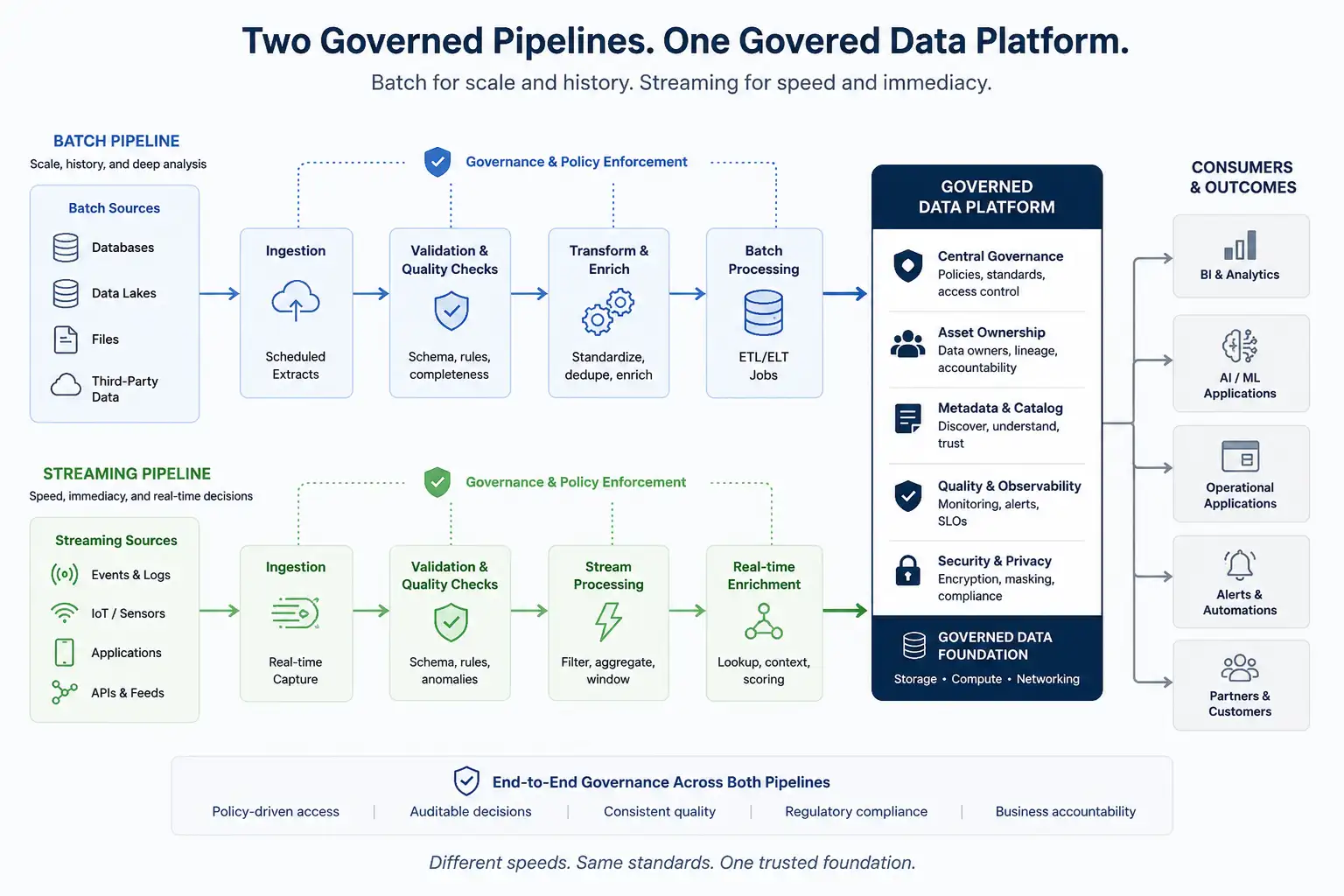
Batch pipelines built for nightly BI refreshes are still running in most enterprises, and for a large share of reporting use cases, that’s fine. The problem shows up the moment an AI workload needs the same pipeline to behave differently — lower latency, tighter validation, different failure handling — and the pipeline wasn’t built with that flexibility in mind.
AI-workload-aware pipeline design usually means:
- Validation gates that block bad data before it reaches a feature store, not after a model has already trained on it.
- Differentiated SLAs per consumer — a nightly BI refresh and a real-time fraud model shouldn’t share a failure-tolerance threshold.
- Idempotent, replayable pipeline stages, so a bad run can be rolled back without corrupting downstream model state.
- Observability that traces a data point from source to the specific model output it influenced.
Metadata as Infrastructure: The Rise of the AI-Aware Catalog
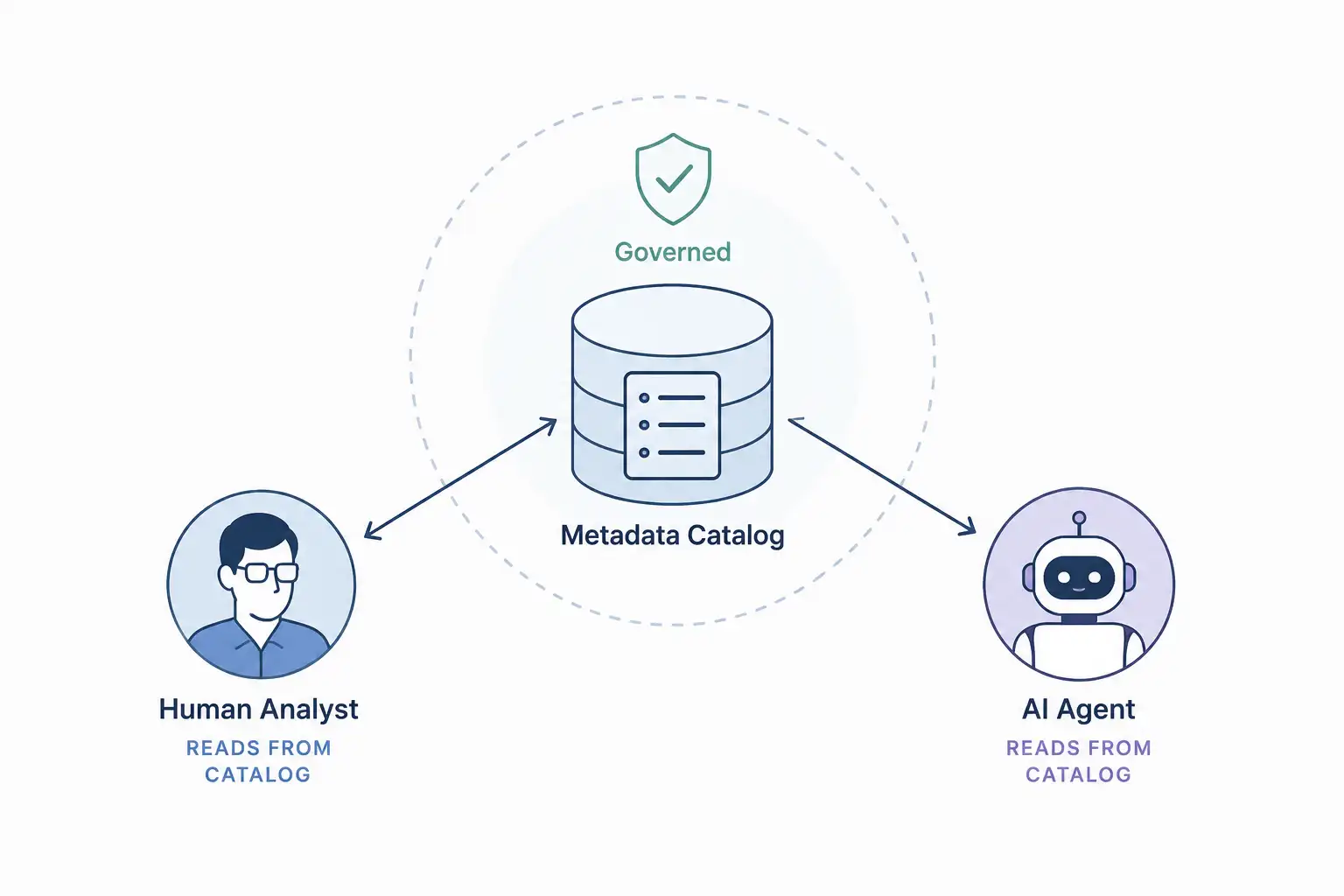
Metadata used to be documentation — a wiki page describing what a table meant, maintained inconsistently and read rarely. On an AI-ready data platform, metadata is closer to infrastructure: it’s the thing an agent actually queries, at inference time, to know what a field means, who’s allowed to see it, and whether it’s still trustworthy.
- Business-context metadata (not just technical schema) captured at the point data is created, not retrofitted later.
- Automated lineage tracking, so an agent — or a human auditor — can trace a data point back to its source in seconds.
- Metadata that updates at the cadence AI development requires, not on an annual audit cycle.
- A single catalog serving both human users and machine consumers, rather than parallel documentation systems that inevitably drift apart.
Vector and Embedding Workloads Are a New Storage Layer, Not a Feature
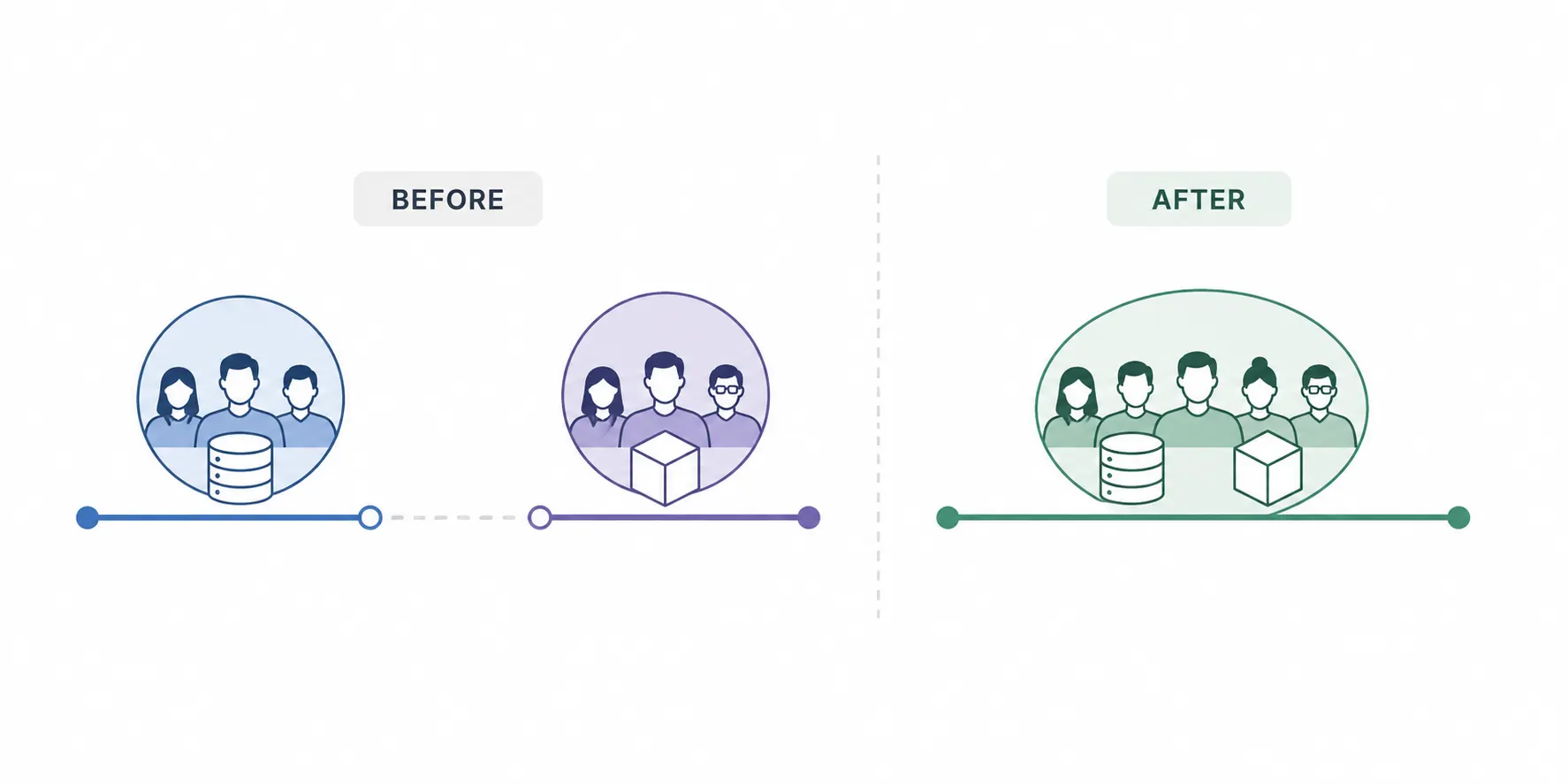
Enterprises frequently treat the vector database as a feature to bolt onto an existing warehouse — index some documents, stand up a RAG pipeline, done. That framing undersells what’s actually being built. A vector store is a new storage layer with its own governance question, and it’s a question most enterprises haven’t asked yet: who decides what’s allowed to get indexed in the first place?
An AI-ready approach to vector and embedding workloads generally includes:
- A defined approval path for what content is eligible for indexing, tied to the same governance layer as structured data.
- Embedding versioning and re-indexing triggers when source content changes, so retrieval doesn’t silently serve stale answers.
- Access control enforced at the vector layer, not assumed to be inherited from the source system.
- Clear separation between retrieval-augmented workloads and transactional ones, so agent-native operations don’t quietly duplicate data with no clear system of record.
MLOps as a Data Platform Discipline, Not a Bolt-On Team
A widely cited industry figure puts the share of ML models that never reach production north of 85%. The reasons vary, but a consistent pattern shows up across post-mortems: the model itself usually wasn’t the failure point. The handoff between data engineering and the team responsible for shipping and monitoring the model was.
- Feature stores treated as a shared platform asset, not a project-specific artifact rebuilt for every model.
- Model monitoring wired into the same observability stack as data pipeline monitoring, not a separate tool with a separate dashboard.
- Retraining triggers tied to data drift signals coming from the platform, not to a calendar reminder.
- A single team accountable for the data-to-model pipeline end to end, rather than a handoff between data engineering and a separate ML team.
Security and Access Control for LLM and Agent Consumption Patterns
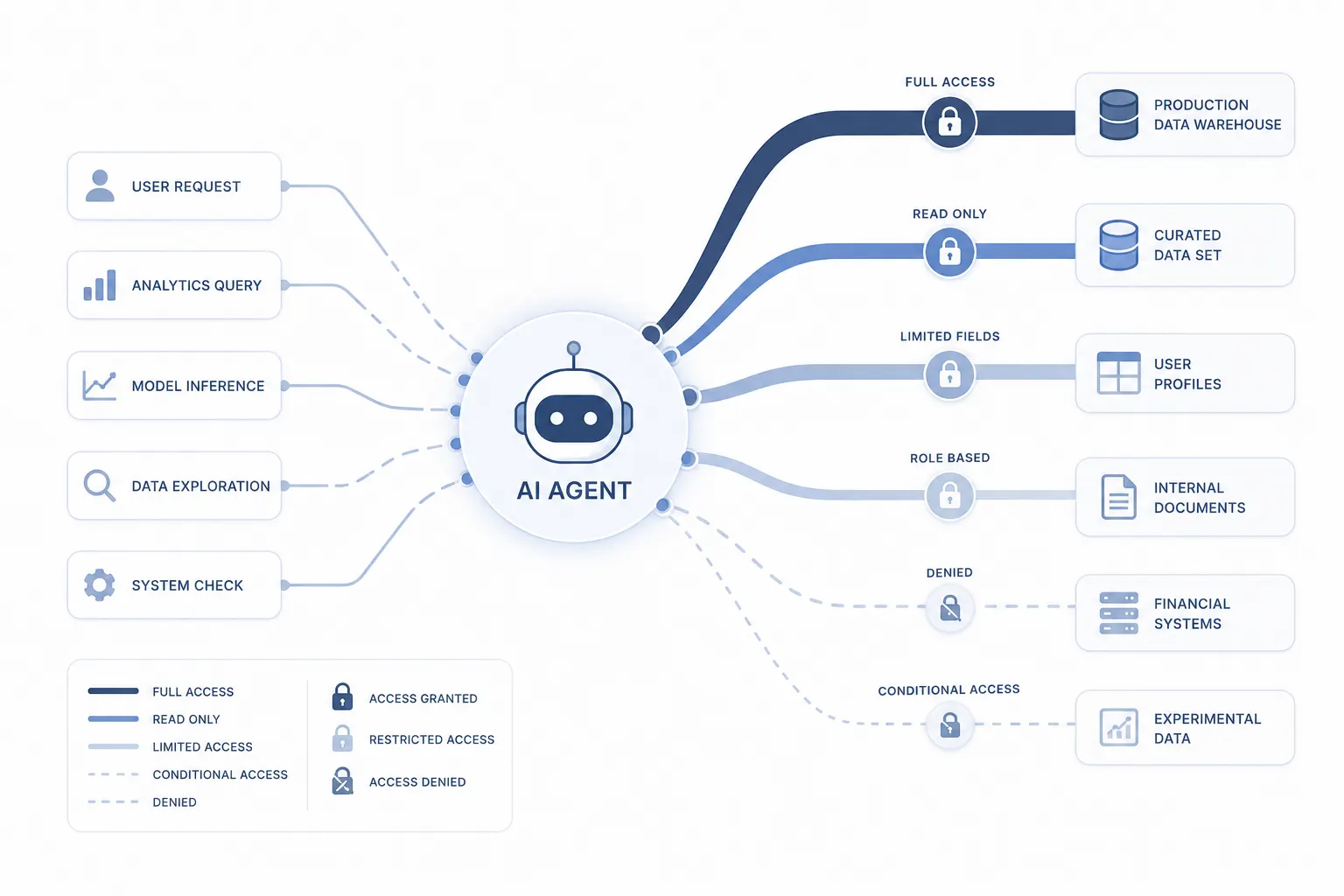
An AI-ready security posture for LLM and agent consumption typically includes:
- Access control enforced per-request, at the point of retrieval, rather than inherited once at the system level.
- Identity propagation from the human or process an agent is acting on behalf of, not just the agent’s own service credentials.
- Continuous, policy-as-code monitoring rather than periodic access reviews, since agent behavior can shift faster than a quarterly audit cycle.
- Clear audit trails showing not just what data an agent touched, but on whose authority it touched it.
Real-Time Data: Why Batch-Only Platforms Can't Support Enterprise AI in 2026
- Event-streaming infrastructure treated as first-class, not a bolt-on for a handful of urgent use cases.
- Feature freshness requirements defined per use case, so teams aren’t guessing at what “real-time enough” means.
- The same governance and quality standards applied to streaming data as to batch — speed doesn’t get a quality exemption.
- Clear routing logic deciding which workloads need streaming and which don’t, rather than defaulting everything to real-time out of caution.
Conclusion: AI-Readiness Is a Delivery Workstream, Not a Feature of the Platform You Already Bought
That’s also why so many enterprises are stuck exactly where the Gartner numbers say they are. The lake got funded, built, and migrated to. The AI-readiness work that sits on top of it — the nine changes covered here — usually didn’t get funded as its own initiative, because it looked like a continuation of work that was already “done.”
Enterprises moving past pilot-stage AI in 2026 are the ones treating AI-readiness as its own delivery workstream, with named owners, measurable SLAs, and a platform architecture built for autonomous consumption from the start — not retrofitted onto a lake designed for a different job.