How to Choose a Cloud Delivery Partner: 7 Questions Every MSP Should Ask

Choosing the right cloud delivery partner is one of the most consequential decisions an MSP makes — and most get it wrong for the same reason. They focus on rate cards and certifications. Both are the wrong signals.
The right cloud delivery partner is not the one with the lowest day rate or the longest list of AWS-certified engineers. It is the partner that treats your client relationship with the same level of care — and accountability — that you do.

This guide gives you seven specific questions to ask any cloud delivery partner before you commit. Each question is designed to surface how they actually operate, not how they present themselves in a sales call.

Who this guide is for
Cloud MSPs, channel partners, and technology delivery firms who regularly place engineering teams on client engagements — Cloud Infrastructure, Data Engineering, DevOps, AI/MLOps, Analytics, or Managed IT — and need to evaluate whether an external delivery partner is genuinely trustworthy.

Why MSP Delivery Partnerships Fail in 2026 — and Who Pays the Price

The failure pattern is predictable. A channel partner wins a contract. Internal capacity does not cover the scope. They bring in a delivery vendor — a common MSP staff augmentation approach — and the vendor provides CVs within 48 hours. Three months later, the client is frustrated, delivery is behind, and the channel partner is managing the fallout alone, without any support from the vendor that placed the engineer.

This is not a rare scenario. In 2026, 26% of MSPs say they do not have enough staff to service their existing clients, and 22% cannot find skilled talent to offer new services at all. The gap between winning work and delivering it has never been wider — and the vendors who fill that gap with CVs rather than accountability are making it worse.

In our experience working with channel partners across the US, EU, and APAC, delivery partnership failures come down to three recurring causes:

  • The vendor took no accountability for outcomes — only for filling headcount
  • Engineers were not structured to ramp quickly on the client’s environment and cadence
  • The channel partner had no visibility into progress until something had already gone wrong
26%
of MSPs

lack staff to service existing clients

22%
of MSPs

can’t find skilled talent for new services

72–96h
shortlist time

what a real delivery partner delivers

≤14 days
onboarding

the maximum for a professional partner

MSP delivery partner failure patterns 2026 — EliteSquad.ai

Already evaluating a delivery partner?

Get your shortlist from EliteSquad.ai in 72–96 hours — pre-vetted, Neural-Certified engineers.

How to Evaluate Pre-Vetted Cloud Engineers and Delivery Partners: 7 Questions

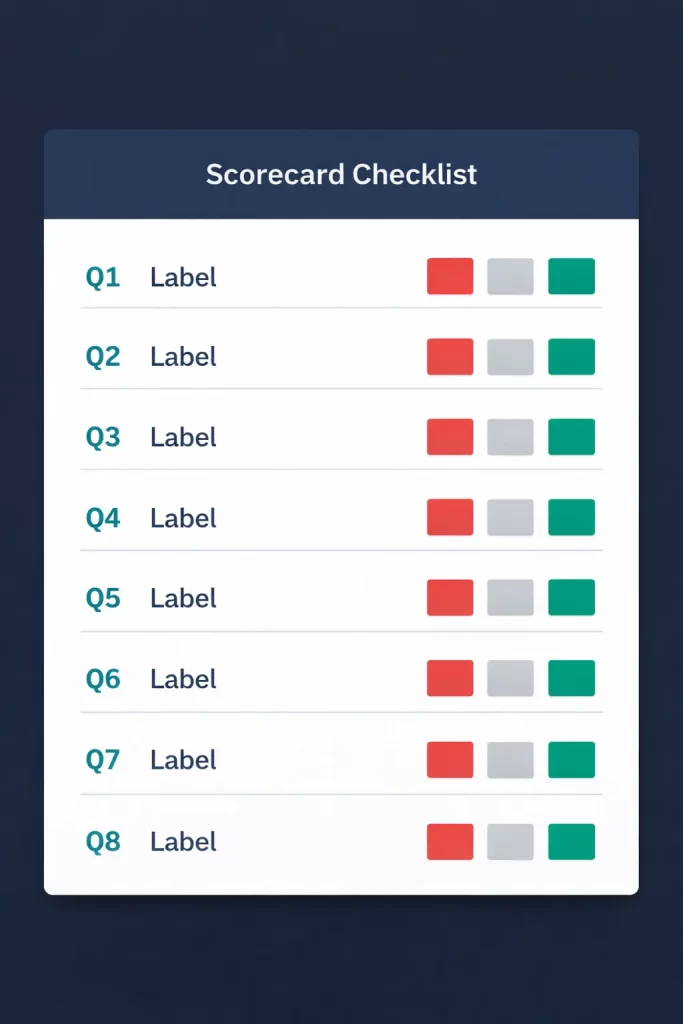
Use these questions in sequence during any delivery partner evaluation. Score each answer 1 (weak), 2 (acceptable), or 3 (strong). A total score of 17 or above signals a partner worth committing to.

01

Do you ever work directly with end clients?

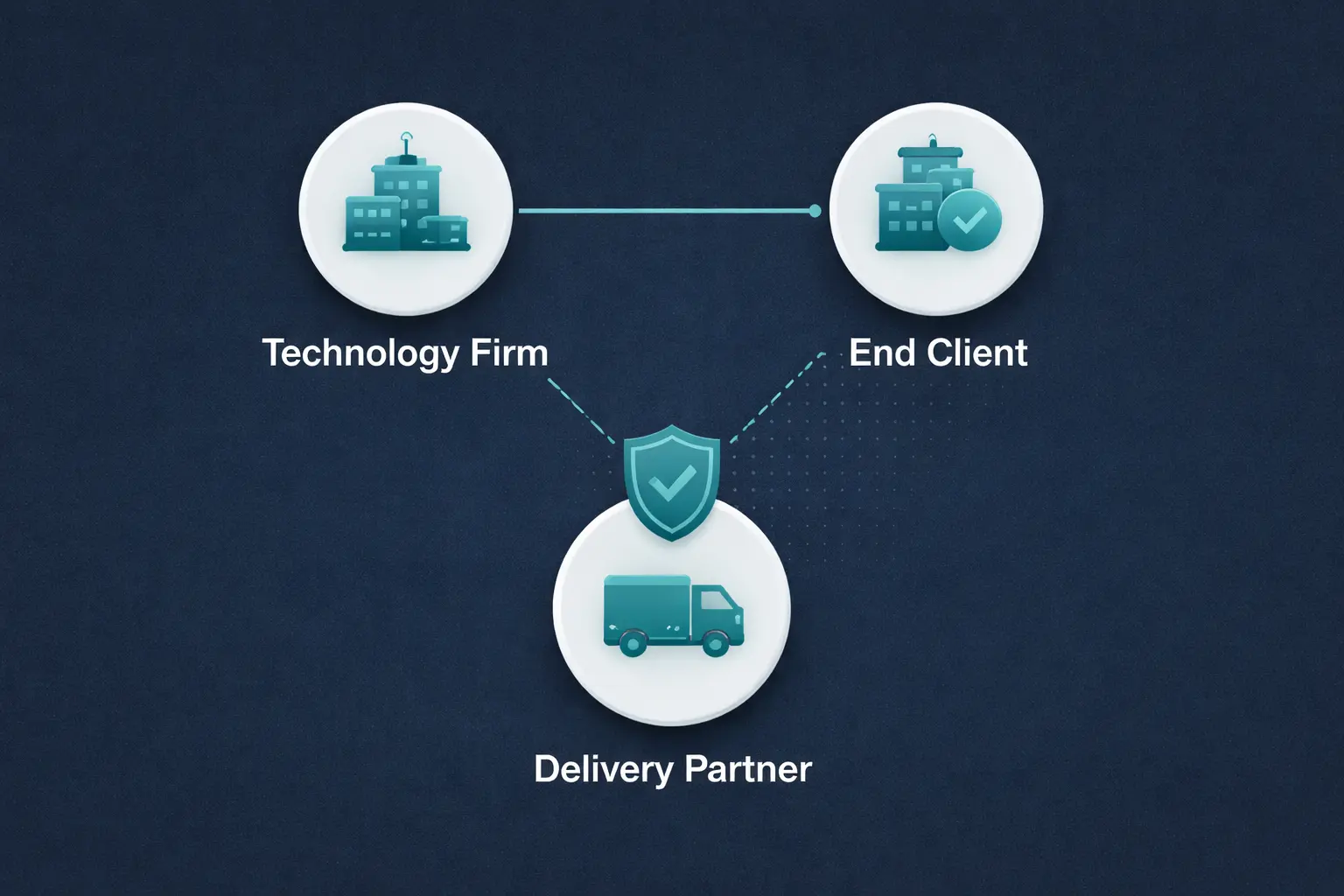
This is the single most important question you will ask any managed service provider delivery partner. Some delivery vendors work through channel partners while simultaneously pursuing direct relationships with those partners’ end clients — a direct conflict of interest that most MSPs discover only after the damage is done. A genuine partner-only firm will have a clear, documented policy against this, and will be able to point you to it without hesitation. Ask to see the actual clause in their standard contract — not just a verbal assurance. If they hesitate or qualify the answer, that tells you everything.

🚩 Red flag answer

“We mostly work through partners, but occasionally take a direct client.” Not acceptable — your client relationships are at risk.

✅ What good looks like

Strict documented policy — never goes direct. They point to the policy on their website and show it as a contractual clause.
Partner-only cloud delivery model protecting MSP client relationships — EliteSquad.ai
02

What is your average time from shortlist request to engineer onboarding?

Speed of mobilisation is one of the most revealing metrics in delivery. Vendors who lack a pre-vetted cloud engineering bench will quote 4–8 weeks as a standard timeline for senior cloud or data engineers. For a live client project already in sprint, this is not a delivery partner — it is a recruitment agency operating at recruitment agency pace. The distinction matters: a recruitment agency’s job ends at placement; a delivery partner’s accountability begins there. Ask for the actual average across their last 10 placements specifically, not their best-case estimate or what they think is achievable.

🚩 Red flag answer

“It depends on the role — typically 4 to 6 weeks for senior engineers.”

✅ What good looks like

Shortlist in 72–96 hours. Engineer onboarded and contributing in ≤14 days. Backed by real deployment data.
03

What does your engineer vetting process specifically assess?

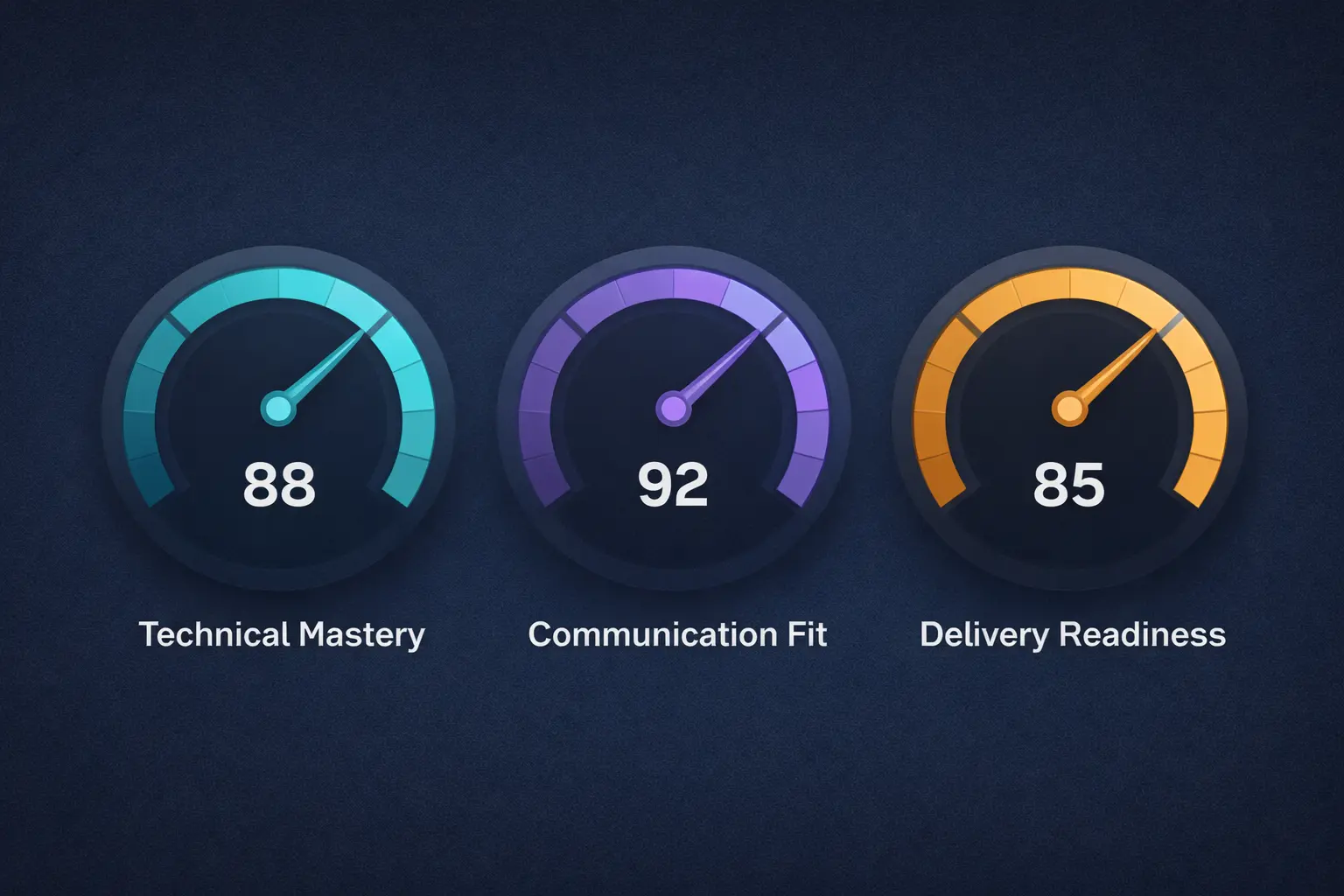
Technical certifications are a starting point, not a qualification for delivery. A strong cloud delivery partner assesses engineers across three distinct dimensions using a framework like the Neural Index: Technical Mastery (skills depth, code quality, architecture thinking, certification verification), Communication Fit (written communication clarity, async work hygiene, stakeholder management capability, time-zone compatibility), and Delivery Readiness (SLA track record, client references, documentation quality, ramp history). Ask to see a sample candidate report — not a formatted CV, but an actual evaluation with dimension-by-dimension scoring. If they cannot produce one within 24 hours, they are filtering CVs, not vetting engineers.

🚩 Red flag answer

“We do a technical interview and check certifications before putting anyone forward.”

✅ What good looks like

Sample evaluation report with dimension-by-dimension scoring available within 24 hours. Minimum score of 80 across all three dimensions to qualify.
Neural Index engineer vetting three dimensions Technical Mastery Communication Fit Delivery Readiness — EliteSquad.ai

Want to see what a Neural Index report looks like?

Request a sample evaluation — dimension scores, strengths, and a full ramp plan included.

04

Who is accountable for delivery outcomes — your firm or the engineer?

Many delivery vendors define their responsibility as ending at placement. What happens after the engineer joins the project is treated as the channel partner’s problem. A genuine cloud delivery partner takes accountability for outcomes throughout the engagement — not just at hire. This means assigning a named Delivery Manager to every project from day one, providing weekly status reporting and risk logs, maintaining SLA commitments with defined milestones and acceptance criteria, and having a structured escalation path that is documented before the first sprint begins. Ask specifically: ‘If an engineer is underperforming at week three — what is your exact process, and who do I call?’

🚩 Red flag answer

“Once the engineer is placed, we check in monthly or if you raise a concern.”

✅ What good looks like

Named Delivery Manager on every engagement. Weekly status. Defined SLA. Documented escalation path from day one.
05

Can you scale a team up or down without restarting the sourcing process?

Client requirements change throughout a project lifecycle — a programme starting with two engineers may need five at peak load and one at steady-state. A delivery partner that can only place individual engineers forces you to restart sourcing every time scope changes, creating delays precisely when a project is most vulnerable. Ask how they manage ramp-up and ramp-down, whether they maintain bench depth across Cloud, Data Engineering, DevOps, AI, and Managed IT specialisations, and whether squad scaling is covered under the existing engagement agreement or requires a new contract and procurement cycle.

🚩 Red flag answer

“You would need to raise a new request for any additional engineers.”

✅ What good looks like

Squad-based model. Can ramp up or down within 72 hours. Bench maintained continuously across all major specialisations.
06

What time-zone coverage do your engineers provide for our clients?

Cloud and data projects require daily collaboration — standups, code reviews, incident responses, sprint planning. A 10-hour time-zone offset kills project velocity and forces asynchronous workarounds that accumulate into delivery delays. A delivery partner with genuine global bench depth should be able to guarantee working-hour overlap with your client’s team — not offer it as ‘best effort’ or ‘we will try to find someone in the right region.’ Get the time-zone commitment in writing, mapped to the specific geography of the client engagement, before any engineer is placed.

🚩 Red flag answer

“There may be some overlap challenges depending on the engineer location.”

✅ What good looks like

Time-zone alignment documented for every placement. US, EU, and APAC coverage available. Contractual guarantee, not best effort.Sample evaluation report with dimension-by-dimension scoring available within 24 hours. Minimum score of 80 across all three dimensions to qualify.

07

What does your partner programme formally offer — and at what levels?

A delivery vendor with no formal partner programme is treating you as a transactional customer, not a strategic partner. A genuine programme should include: documented tiers with clear advancement criteria, cashback or revenue share on placed volume, a named partner success contact who is accountable to your account, priority access to shortlists when demand is high, and pre-sales support for complex bids at senior tiers. ‘Priority access for our best partners’ with nothing behind it in writing is not a partner programme — it is a promise with no commercial structure.

🚩 Red flag answer

“We give priority access to our best partners.” No documented tiers, no cashback, no named contact.

✅ What good looks like

Formal programme with documented tiers, Partner Points cashback, dedicated contact, and Shadow CTO pre-sales support at senior tiers.
Cloud delivery partner scorecard 7 questions MSP evaluation 2026 — EliteSquad.ai

The SLA-Backed Delivery Scorecard — Rate Your Current or Prospective Partner

Score each question 1, 2, or 3 based on the answer you receive. A total score of 17 or above indicates a delivery partner worth committing to. Below 14 — keep searching.

# Question 1 — Weak 2 — Acceptable 3 — Strong
01 Partner-only policy? Goes direct sometimes Mostly partner-led Strict documented policy
02 Mobilisation speed? 4–6 weeks or more 2–3 weeks 72hrs shortlist + 14 days
03 Vetting depth? CVs only Technical interview 3-dimension score, 80+ min
04 Delivery accountability? Disappears post-hire Monthly check-in Named Delivery Manager
05 Squad scalability? Per-engineer only Can add slowly Squad model, 72hr ramp
06 Time-zone alignment? Not managed Best effort Contractual guarantee
07 Partner programme? None Ad hoc perks Formal tiers + cashback

🔴 Below 14

Keep searching

🟡 14–16

Proceed with conditions

🟢 17–21

Partner worth investing in

The right cloud delivery partner is not the one with the best rate card. It is the one who scores 17 or above — and can prove every answer they give you.
EliteSquad.ai Neural-Certified standard cloud delivery partner MSP — 2026

What Good Looks Like — The Neural-Certified Standard

EliteSquad.ai was built specifically to score 21 out of 21 on every one of these seven questions — and to prove it. Here is what our standard looks like:
  • Partner-only — we never go direct. Non-circumvention is contractual in every agreement we sign.
  • Shortlist in 72–96 hours. Engineer onboarded and contributing in 14 days or less.
  • Neural Index vetting — every engineer scored across Technical Mastery, Communication Fit, and Delivery Readiness. Minimum 80 across all three to become Neural-Certified.
  • Named Delivery Manager on every engagement. Weekly status reports. Defined SLA. Clear escalation path from day one.
  • Squad-based capacity — ramp up or down within 72 hours across Cloud, Data, DevOps, AI, and Managed IT.
  • Time-zone aligned coverage across US, EU, and APAC — documented and contractual.
  • Neural Alliance partner programme — three tiers with Partner Points cashback, priority shortlisting, and Shadow CTO support at senior tiers.
The technology services market in 2026 does not need another delivery vendor who says the right things. It needs partners who can prove every answer with documentation, track record, and contractual protection.

Choosing the right cloud delivery partner is not complicated — but it requires asking the right questions before you sign, not after the project has slipped. Use this scoring framework before your next delivery partner conversation. If they score 17 or above — they are worth investing in. If they cannot answer three or more clearly — keep searching.


See how EliteSquad.ai scores on every question

Book a 30-minute discovery call. No pitch — just answers, documented.

Frequently Asked Questions

What is a cloud delivery partner for MSPs?
A cloud delivery partner for MSPs is a firm that provides pre-vetted engineering teams — covering Cloud Infrastructure, Data Engineering, DevOps, AI/MLOps, Analytics, and Managed IT — to supplement an MSP’s capacity on client projects. Unlike a recruitment agency, a genuine delivery partner maintains accountability for outcomes throughout the engagement, not just at placement.
Use the seven-question scoring framework in this guide. Score each answer 1 (weak), 2 (acceptable), or 3 (strong). A total of 17 or above indicates a partner worth committing to. Pay particular attention to Questions 1, 3, and 4 — these reveal the most about how a partner actually operates versus how they present in a sales call.
A partner-only delivery model means the delivery firm never works directly with end clients — all engagements come through a technology firm or MSP who owns the client relationship. At EliteSquad.ai, this commitment is contractual — embedded through non-circumvention and non-solicitation clauses in every agreement signed.
A delivery partner with genuine pre-vetted bench depth should provide a qualified shortlist within 72–96 hours and have an engineer onboarded and contributing within 14 days. If a vendor quotes 4–6 weeks as their standard timeline, they are operating as a recruitment agency, not a delivery partner.
The Neural Index is EliteSquad.ai’s proprietary engineer assessment framework. Every engineer is scored across three dimensions — Technical Mastery, Communication Fit, and Delivery Readiness — each on a scale of 0 to 100. Only engineers who score 80 or above across all three dimensions are Neural-Certified and eligible for client shortlists.
A genuine partner programme should include documented tiers with clear advancement criteria, cashback or Partner Points on placed volume, a named partner success contact, priority shortlist access, and pre-sales support for complex bids at senior tiers. Vague ‘priority access’ promises without documentation are not a partner programme.
A staff augmentation company provides individual contractors with no accountability for what happens after placement. A delivery partner provides structured squads with a Delivery Manager accountable for outcomes, SLA-backed milestones, weekly reporting, and a documented escalation path. One fills headcount. The other owns delivery.